
Rangefinder vs. GPS Watch: Which Is Better for Golf Distance?
When it comes to dialing in distances on the golf course, most amateurs eventually land in one of two camps: laser rangefinder users or GPS watch loyalists. Both tools aim to solve the same problem—knowing how far you are from your target—but they go about it in very different ways.
Let’s break down the trade-offs in a way that actually reflects how these devices perform during real rounds.
How Each Device Works
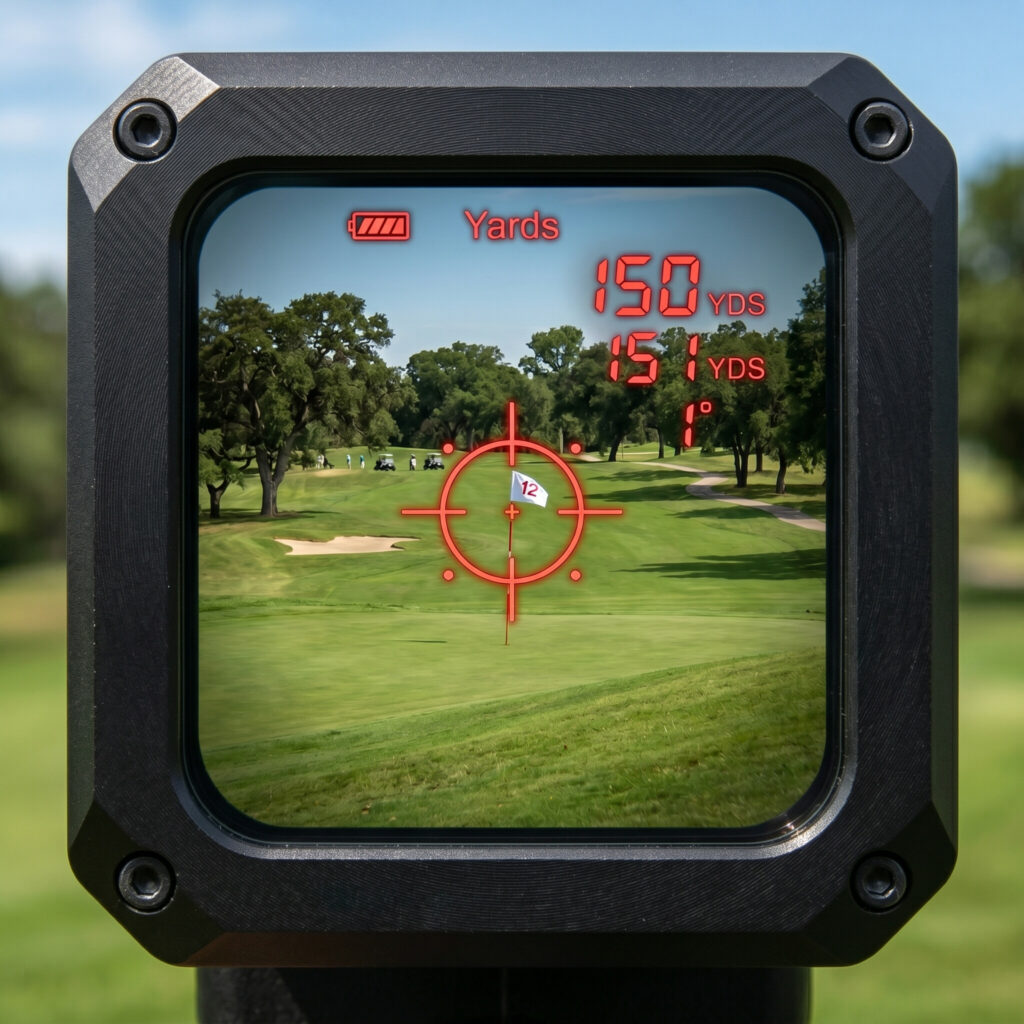
A rangefinder uses a laser to measure the exact distance to a specific target—usually the flagstick. You point, shoot, and get a precise number.
A GPS watch uses satellite data to show distances to fixed points on the course—front, middle, and back of the green, hazards, and layups—without needing to aim at anything.
The Case for Rangefinders
✅ Pros
1. Pin-Point Accuracy
Rangefinders excel when you need exact yardage to the flag. If you lock onto the stick, you’re getting a highly precise number—often within a yard. Works great at the driving range to target distances.
2. Great for Approach Shots
If you’re attacking pins or playing courses with large greens, knowing the exact flag distance can help you commit to a shot more confidently.
3. Slope Function (Practice Rounds)
Many models offer slope-adjusted distances, which factor in elevation changes. This is extremely useful for casual rounds or practice (though not legal in most tournaments).
❌ Cons
1. Slower Pace of Play
Pulling the device out, aiming, and locking onto the flag takes time—especially if you struggle to steady your hands or pick up the pin.
2. Requires Line of Sight
If you can’t see the flag (blind shots, doglegs, trees), the rangefinder becomes useless.
3. Limited Course Awareness
You only get distance to what you shoot. Want to know carry distance over a bunker or layup yardage? That’s another step—or guesswork.
4. Struggles in Poor Conditions
Fog, rain, or bright glare can interfere with the laser.
The Case for GPS Watches
✅ Pros
1. Speed and Convenience
This is where GPS watches shine. A quick glance at your wrist gives you front/middle/back distances instantly—no setup required.

2. Better Course Management
Most watches show hazards, doglegs, and layup distances. That’s a huge advantage for decision-making, especially for mid-to-high handicaps.
3. Works Anywhere on the Course
No need for line of sight. Whether you’re behind trees or on a blind approach, the distances are still there.
4. Tracks Your Game
Many GPS watches integrate shot tracking, scoring, and even swing data. Over time, this becomes more valuable than raw distance alone.
I personally prefer the GPS watch. I just use my Apple watch and the 18Birdies app. I talk about the app here.
❌ Cons
1. Less Precise to the Pin
You’re typically getting distances to sections of the green, not the exact flag. If the pin is tucked front or back, you’re estimating.
2. Subscription Costs (Sometimes)
Some brands lock advanced features behind paid subscriptions.
3. Battery Dependency
If you forget to charge it, you’re out of luck mid-round.
4. Accuracy Can Vary Slightly
GPS is usually within a few yards, but not as exact as a laser locked onto a flag. Also, if you play some mountain golf courses like I do the satellite connection can be spotty.
Real-World Use: What Actually Matters
For most amateur golfers—especially in the 10–20 handicap range—the limiting factor isn’t whether a number is off by 2 yards. It’s consistency, strike quality, and decision-making.
This is where your preference for a GPS watch makes a lot of sense.
A GPS watch:
- Keeps you moving (important for pace of play)
- Helps avoid big mistakes (water, bunkers, wrong club)
- Simplifies decisions
A rangefinder:
- Helps fine-tune already solid distance control
- Benefits players who consistently hit their numbers
In other words, rangefinders reward precision, while GPS watches support strategy.
Why Many Golfers End Up Using Both
It’s increasingly common to see golfers carry both devices:
- GPS watch for quick decisions and course management. Like I said above, my preferred method.
- Rangefinder for dialing in approach shots when needed. Its also nice at the driving range to get an accurate distance at the target you are shooting at.
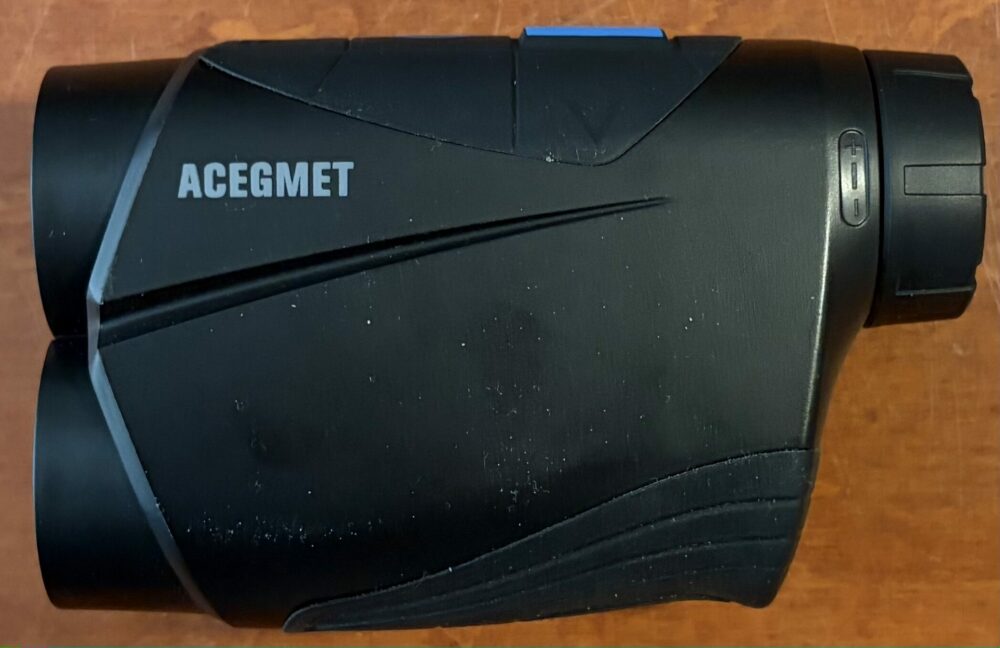
This hybrid approach gives you the best of both worlds—but it’s not necessary for everyone. I actually have both. My range finder is a pretty cheap one I got off Amazon that works for what I do use it for.
Final Verdict
If you value speed, ease of use, and better overall course management, a GPS watch is the smarter choice—and aligns well with how most amateurs actually play.
If you’re more focused on precision and attacking pins, a rangefinder has the edge.
Your preference for a GPS watch isn’t just about convenience—it’s a practical decision that likely helps your scoring more than chasing exact yardages ever would.